
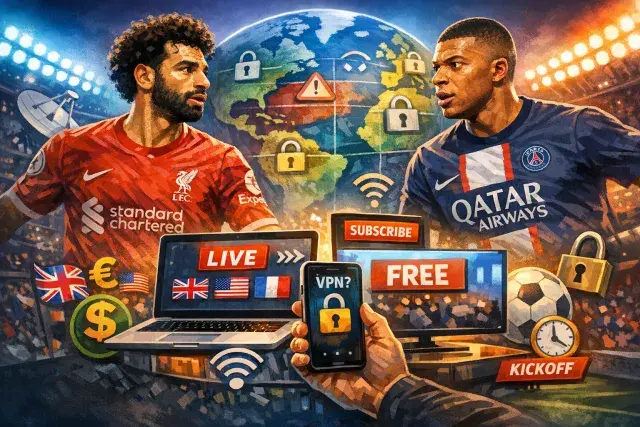

The immediate question for viewers is practical: how to watch Liverpool versus Paris Saint-Germain legally, and in some places for free, as the return meeting of their European quarterfinal arrives. The wider significance is cultural as much as commercial, because access to major live events now depends heavily on fragmented streaming rights that vary sharply by country.
That fragmentation has changed the viewing experience. Audiences are no longer simply turning on a familiar channel; they are often comparing subscription bundles, regional blackout rules, mobile apps, and public broadcasters to find a workable option before kickoff.
Why access depends on where you live
International broadcasting for elite European football is sold territory by territory. That means the same fixture can sit behind a premium paywall in one market, appear on a mainstream television network in another, and be offered through a temporary free trial elsewhere. For viewers, the result is a patchwork system shaped less by the event itself than by licensing contracts.
This is why “where to watch” guides have become so important. They do more than list channels. They help audiences sort through overlapping rights holders, distinguish official streams from unauthorized ones, and avoid last-minute confusion when a platform requires registration or location verification.
The appeal of free options comes with caveats
Free viewing routes, when they exist, tend to fall into a few categories: ad-supported broadcasters, limited promotional trials, or public-service networks in selected countries. These options can be valuable for casual viewers, but they often come with restrictions. A free stream may require an account, may not include every device type, or may be available only within a specific national border.
That matters because major live broadcasts remain one of the few forms of television that people still seek out in real time. When access is restricted, audiences often look for workarounds. The safer choice is always an authorized provider, both for reliability and for basic digital security. Unofficial streams frequently carry poor video quality, abrupt interruptions, or malicious advertising.
What is at stake beyond the viewing logistics
The first meeting left Liverpool chasing a two-goal deficit after PSG won 2-0, which raises the stakes for the second encounter and helps explain the intense global interest. High-pressure knockout evenings draw unusually large audiences because they combine uncertainty, narrative, and scarcity: if you miss the live window, the shared experience is gone.
That is also why these rights are so valuable. Broadcasters and streaming platforms use premium live football to attract subscribers, retain existing customers, and strengthen their position in increasingly crowded media markets. For viewers, however, the cost of following a single competition can become difficult to justify when rights are split across multiple services.
How viewers can choose the best legal stream
The most useful approach is simple. Check the official local rights holder first, confirm whether the broadcast is available on television or only through an app, and verify whether a free option is truly free or tied to a trial that later converts into a paid plan. Device compatibility also matters, particularly for people planning to watch on smart televisions, tablets, or game consoles.
As the quarterfinal second leg begins, the enduring lesson is that live football remains one of the strongest forces in global media, but watching it has become more complicated than the event on the pitch. The action may be universal; access is not.